

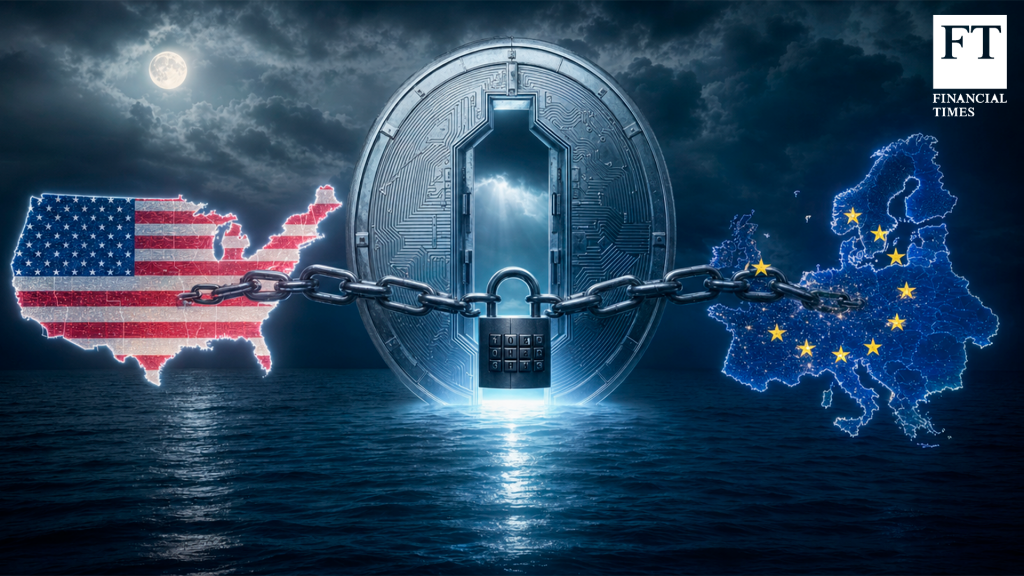
For years, tariffs between the United States and Europe felt like a relic of the past — something tied to older trade disputes and political posturing rather than modern economic reality.
That’s no longer the case.
Today, tariffs are back at the center of transatlantic relations. But this time, they aren’t loud, dramatic, or explosive. Instead, they are subtle, strategic, and — in many ways — more impactful than before.
📊 A Different Kind of Trade Tension
What makes the current situation unique is how quiet it feels.
There are no daily headlines about a “trade war.” No dramatic announcements of retaliation. No immediate breakdown in diplomatic relations.
And yet, something is clearly shifting.
The United States has increasingly turned to tariffs and industrial policies to protect domestic industries, particularly in sectors like manufacturing, clean energy, and advanced technology. While these policies are often framed as internal economic measures, their effects are felt far beyond U.S. borders.
Europe, as one of America’s closest economic partners, is inevitably caught in that ripple.
⚙️ Why Tariffs Are Back
To understand what’s happening, you have to look beyond trade itself.
Tariffs today are less about balancing imports and exports and more about control:
- control over supply chains
- control over strategic industries
- control over economic resilience
After years of global disruptions — from pandemics to geopolitical tensions — governments are no longer comfortable relying entirely on international markets.
The result? A shift toward economic self-protection.
And tariffs are one of the simplest tools to make that happen.
🌍 Europe’s Quiet Response
What’s interesting is not just what the U.S. is doing — but how Europe is responding.
Unlike past trade disputes, the European Union hasn’t rushed into direct retaliation. Instead, it has taken a more measured approach:
- investing in its own industries
- adjusting regulations
- strengthening internal supply chains
In other words, Europe isn’t fighting tariffs head-on.
It’s adapting around them.
That strategy may not grab headlines, but it reflects a deeper understanding of the current global environment — where long-term positioning matters more than short-term reactions.
💶 The Real Impact (And Why You Might Not Notice It Yet)
Tariffs don’t always create immediate shocks.
Instead, they work slowly, almost invisibly:
- companies adjust pricing structures
- supply chains shift
- investment decisions change
For businesses, this can mean higher costs and more complex logistics.
For consumers, the impact is often indirect — slightly higher prices, fewer options, or delays that are hard to trace back to a single cause.
But over time, these small changes add up.
🏭 Industries Under Pressure
Some sectors are feeling the pressure more than others:
- Automotive: cross-border production makes tariffs especially disruptive
- Energy: competition over clean energy investments is intensifying
- Manufacturing: companies are reconsidering where they produce goods
For European companies, the challenge is clear: stay competitive in a market where the rules are gradually changing.
🔍 A Shift Toward Regional Economies
Perhaps the most important long-term trend is the move away from fully globalized trade toward regional systems.
Instead of a single, interconnected global market, we’re seeing:
- stronger regional blocs
- more localized production
- tighter control over critical resources
The U.S. is prioritizing domestic capacity.
Europe is reinforcing internal cooperation.
The world isn’t deglobalizing — but it is becoming more structured.
⚠️ What Comes Next?
No one expects a sudden explosion in tariffs between the U.S. and Europe.
But a gradual escalation is very possible:
- more sectors could be affected
- regulations could tighten
- competition could intensify
At the same time, both sides still have strong incentives to cooperate.
This creates a complex dynamic:
competition without complete conflict.
🧠 Why This Matters More Than It Seems
It’s easy to overlook tariffs because they don’t always create immediate drama.
But they shape the environment in which economies operate.
They influence:
- where companies invest
- how goods are produced
- how markets evolve
And perhaps most importantly, they redefine the balance between globalization and national strategy.
🔥 Final Thought
The current tariff situation between the United States and Europe isn’t a sudden clash.
It’s something quieter.
More strategic.
And potentially more important.
Because the biggest changes in the global economy don’t always arrive with noise —
sometimes, they arrive through small decisions that slowly change the rules of the game.